A dog who suddenly seems thirstier than usual, empties her water bowl faster than she used to, or needs more frequent bathroom breaks is often dismissed as simply drinking more because of warm weather or a new food. In reality, these can be some of the earliest signs of diabetes in dogs, and catching them early makes an enormous difference in how manageable the condition becomes.
This guide covers the early signs of diabetes in dogs, what causes the condition, why bloodwork is necessary to confirm it, how it is typically managed, and what to do if your dog develops signs that need urgent attention.
Table Of Contents
- 1 Why Diabetes Often Goes Unnoticed in Its Early Stages
- 2 Early Signs of Diabetes in Dogs to Watch For
- 3 What Causes Diabetes in Dogs
- 4 Why Bloodwork Is Necessary to Confirm Diabetes
- 5 How Diabetes in Dogs Is Managed
- 6 Risks of Leaving Diabetes Untreated
- 7 Signs That Warrant Immediate Veterinary Attention
- 8 How At-Home Bloodwork and Monitoring Visits Work With Comfort Paws Veterinary Care
- 9 Comparing Normal Behavior to Early Diabetes Signs
- 10 Catching the Signs Early Makes All the Difference
- 11 FAQs
Why Diabetes Often Goes Unnoticed in Its Early Stages
Diabetes develops gradually in most dogs, which is exactly what makes it so easy to miss at first. Increased thirst and urination often creep in slowly enough that an owner adjusts without noticing, refilling the water bowl more often without registering that anything has actually changed. How to care for a senior dog and improve her quality of life covers the kind of everyday attentiveness that makes these small shifts easier to catch. A dog diagnosed early, before complications develop, generally has a much smoother path to a stable, well-managed routine than one diagnosed after the disease has already caused secondary damage, which is exactly why learning the early signs of diabetes in dogs matters so much.
Early Signs of Diabetes in Dogs to Watch For
Increased Thirst, Urination, and Appetite Changes
Excessive thirst, known as polydipsia, and more frequent urination are usually the earliest and most consistent signs of diabetes in dogs, appearing well before other symptoms become obvious. A dog with diabetes may eat normally or even more than usual while still losing weight, since her body is no longer able to use glucose from food efficiently for energy, and this combination is one of the more telling early signs worth mentioning to a veterinarian.
Lethargy and Vision Changes
A dog with untreated diabetes often seems tired or less interested in her usual activities, since her cells are effectively starved of usable energy despite normal or increased food intake. Chronic pain in dogs can produce a similar kind of reduced activity, which is one reason a proper evaluation matters rather than assuming either cause without bloodwork. Cataracts develop in a large percentage of diabetic dogs, sometimes within months of diagnosis, and a new cloudiness in one or both eyes is often one of the more visible signs that prompts an overdue visit, though it tends to appear later than the thirst and appetite changes above.
What Causes Diabetes in Dogs
Diabetes in dogs occurs when the body cannot produce enough insulin or cannot use it effectively, leading to consistently elevated blood sugar. Age, obesity, certain breed predispositions, and a history of pancreatitis all increase a dog’s risk, which is part of why regular wellness visits become more important as a dog moves into her senior years. Diabetes is typically a lifelong condition rather than a temporary one, but this does not mean it cannot be managed successfully with the right combination of monitoring, diet, and treatment.
Why Bloodwork Is Necessary to Confirm Diabetes
Symptoms alone are not enough to confirm a diabetes diagnosis, since several other conditions can cause similar signs. Bloodwork measuring blood glucose alongside a fructosamine level, which reflects average blood sugar over the preceding weeks, gives a veterinarian a much more reliable picture than a single glucose reading taken in isolation, since a single elevated value can sometimes reflect stress rather than true diabetes. Bloodwork also helps rule out other conditions that can cause similar symptoms, such as kidney disease or an infection. This kind of testing is part of the broader diagnostic bloodwork services available for senior dogs, and it is usually the fastest way to move from a vague suspicion to a confirmed answer.
How Diabetes in Dogs Is Managed
Most diabetic dogs require regular insulin injections along with periodic bloodwork to monitor how well her blood sugar is being controlled and to adjust the dose as needed over time. A veterinarian will typically walk through injection technique, storage, and timing in detail before you are expected to manage it independently, and follow-up visits exist specifically to work through any part of the routine that still feels uncertain. A consistent diet and feeding schedule also play a significant role in keeping blood sugar stable, since insulin dosing is planned around predictable meal timing rather than a variable routine.
Risks of Leaving Diabetes Untreated
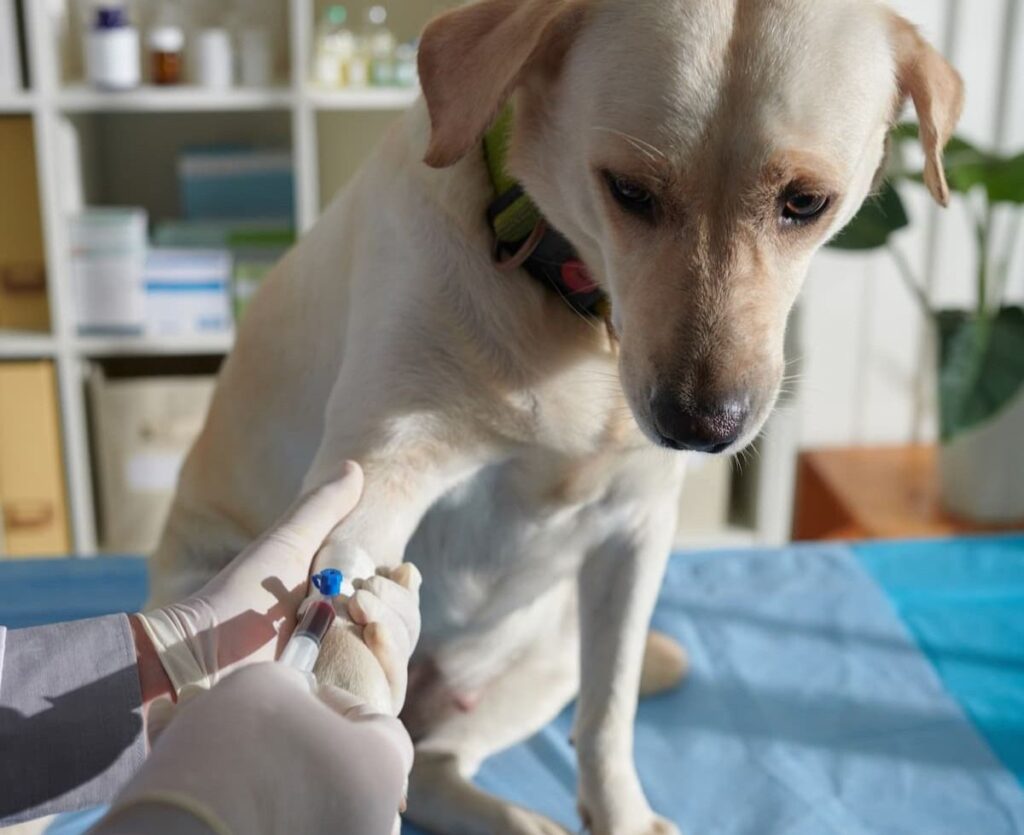
Diabetes that goes unmanaged does not simply stay the same. Diabetic ketoacidosis is a serious, potentially life-threatening complication that can develop when diabetes goes unmanaged for too long, and it requires urgent veterinary attention rather than routine care. Rapid or labored breathing in senior dogs is one of several signs that can accompany this kind of emergency. Beyond ketoacidosis, poorly controlled diabetes increases the risk of cataracts, urinary tract infections, and a general decline in overall health that becomes harder to reverse the longer it continues. None of this is meant to alarm a family whose dog has just been diagnosed. It simply underscores why consistent monitoring is what actually keeps a diabetic dog stable over the long run.
Signs That Warrant Immediate Veterinary Attention
- Vomiting, especially if repeated or combined with lethargy or weakness.
- Rapid, labored, or unusually deep breathing.
- Sudden collapse, extreme weakness, or an inability to stand.
- A strong, unusual, sweet or fruity odor to the breath.
- Sudden disorientation or a marked change in responsiveness.
If any of these signs appear, especially in combination, this generally calls for urgent evaluation rather than a scheduled visit, and in some cases an emergency hospital equipped for immediate stabilization is the safer and more appropriate option.
How At-Home Bloodwork and Monitoring Visits Work With Comfort Paws Veterinary Care
How mobile vets work compared to a traditional clinic explains how routine bloodwork and monitoring visits can happen in your dog’s own home, which matters for a diabetic dog who benefits from a calm, low-stress routine rather than the added strain of frequent car rides and unfamiliar waiting rooms. A predictable visit schedule for bloodwork and check-ins helps keep a diabetic dog’s treatment plan on track, since consistency in monitoring is just as important as consistency in her diet and insulin timing.
Comparing Normal Behavior to Early Diabetes Signs
Behavior |
Typical for a Healthy Senior Dog |
Possible Early Sign of Diabetes |
| Thirst and water intake | Stable, consistent with weather and activity | Noticeably increased over weeks |
| Appetite and weight | Stable weight with normal appetite | Weight loss despite normal or increased appetite |
| Energy level | Gradual, mild slowing with age | Persistent lethargy or weakness |
| Eyes | Clear, with normal aging changes | New cloudiness, especially if sudden |
| Urination | Consistent with typical routine | More frequent, larger volume urination |
Catching the Signs Early Makes All the Difference
Recognizing the early signs of diabetes in dogs gives your senior dog the best possible chance at a smooth, well-managed diagnosis rather than one complicated by delay. Comfort Paws Veterinary Care brings bloodwork, monitoring, and ongoing care directly into your home, so managing a chronic condition never has to mean extra stress or disruption for your dog. Schedule an at-home bloodwork visit if your dog has shown any of these changes recently.
FAQs
Q: What are the earliest signs of diabetes in dogs?
A: The earliest signs of diabetes in dogs are usually increased thirst and urination, followed by increased appetite paired with weight loss. These signs often develop gradually and can be easy to overlook at first.
Q: How is diabetes in dogs diagnosed?
A: Diabetes is confirmed through bloodwork measuring blood glucose and fructosamine levels, which together give a more reliable picture than symptoms or a single glucose reading alone.
Q: Can diabetes in dogs be managed successfully?
A: Yes. Most diabetic dogs do well with a combination of insulin therapy, a consistent diet and feeding schedule, and regular monitoring, especially when the condition is caught and treated early.
Q: What is diabetic ketoacidosis and why is it dangerous?
A: Diabetic ketoacidosis is a serious complication of unmanaged diabetes that can develop quickly and requires urgent veterinary attention. Signs like vomiting, rapid breathing, or sudden weakness should never be treated as something to wait out.
Q: How does Comfort Paws Veterinary Care support a dog with diabetes?
A: Comfort Paws Veterinary Care provides bloodwork and ongoing monitoring visits in your dog’s own home, helping keep a diabetic dog’s routine consistent and low-stress without frequent trips to a clinic.