Bloodwork tells part of a senior cat’s story, but it cannot show what is actually happening inside her body. A senior cat ultrasound fills that gap, giving a veterinarian a real look at organs, tissues, and structures that a blood panel can only hint at through indirect values. For an aging cat whose symptoms are vague or whose bloodwork has raised a question rather than answered one, this kind of imaging is often the next logical step.
This guide covers what a senior cat ultrasound can reveal, the most common reasons a veterinarian recommends one, what Comfort Paws Veterinary Care currently offers with in-home ultrasound, how it fits alongside bloodwork, and what an at-home scan looks like from start to finish.
Table Of Contents
- 1 Why Ultrasound Imaging Matters for Senior Cats
- 2 What a Senior Cat Ultrasound Can Actually Reveal
- 3 Common Reasons a Veterinarian May Recommend an Ultrasound
- 4 What Comfort Paws Veterinary Care Currently Offers
- 5 How Ultrasound Fits Into a Broader Diagnostic Picture
- 6 Signs That May Warrant an Ultrasound Evaluation
- 7 What to Expect During an At-Home Ultrasound Visit
- 8 Getting Answers Without Added Stress
- 9 FAQs
Why Ultrasound Imaging Matters for Senior Cats
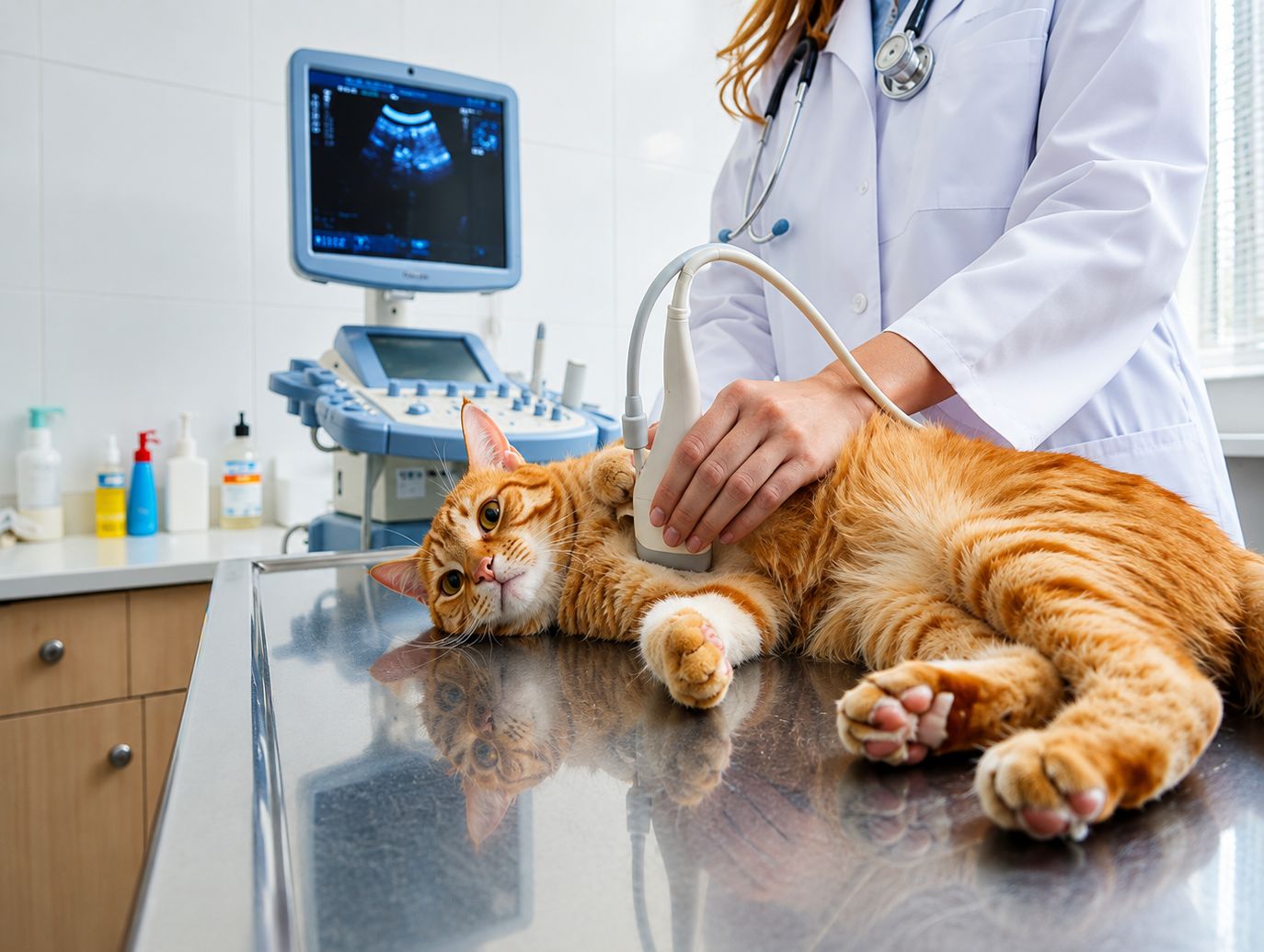
As cats age, more of what affects their health happens on the inside, in organs and tissues that a physical exam alone cannot fully evaluate. Regular wellness exams and bloodwork catch the first sign that something has changed, and a senior cat ultrasound is often the tool that explains what that change actually looks like. Ultrasound uses sound waves rather than radiation, which makes it a comfortable, non-invasive option for a cat who may already be managing other health concerns. Most cats tolerate the process well, especially in a calm, familiar setting, and sedation is rarely necessary.
What a Senior Cat Ultrasound Can Actually Reveal
Abdominal Organ Health
An abdominal ultrasound allows a veterinarian to examine the kidneys, liver, spleen, and intestines directly, checking their size, shape, and internal structure for changes that suggest disease or dysfunction. This is particularly useful for a cat with abnormal bloodwork, since the scan can often identify which organ is involved and how significantly it has been affected.
Cardiac Structure and Bladder Findings
An ultrasound can also evaluate cardiac structure, giving a veterinarian a look at the heart’s chambers and walls rather than relying on a stethoscope alone, which matters for a cat with an elevated heart rate or a newly detected murmur. Blood pressure readings taken during the same visit often round out this part of the picture. Ultrasound is also effective at identifying masses, cysts, and bladder stones that may not be obvious from a physical exam alone, and catching these findings earlier generally means more treatment options remain on the table.
Common Reasons a Veterinarian May Recommend an Ultrasound
An ultrasound is rarely the first step. A cat already managing kidney disease may be scheduled for periodic scans to track how her kidneys are holding up over time, since structural changes do not always show up clearly through bloodwork alone. When a senior cat is losing weight or vomiting without an obvious cause, an ultrasound can help rule several possibilities in or out at once. Loss of appetite in an aging cat is one of the most common reasons this kind of workup gets started. Bloodwork that comes back with an unexpected result, such as elevated kidney values or liver enzymes, often leads directly to an ultrasound recommendation, since imaging is frequently the fastest way to narrow that number down to a likely cause.
What Comfort Paws Veterinary Care Currently Offers
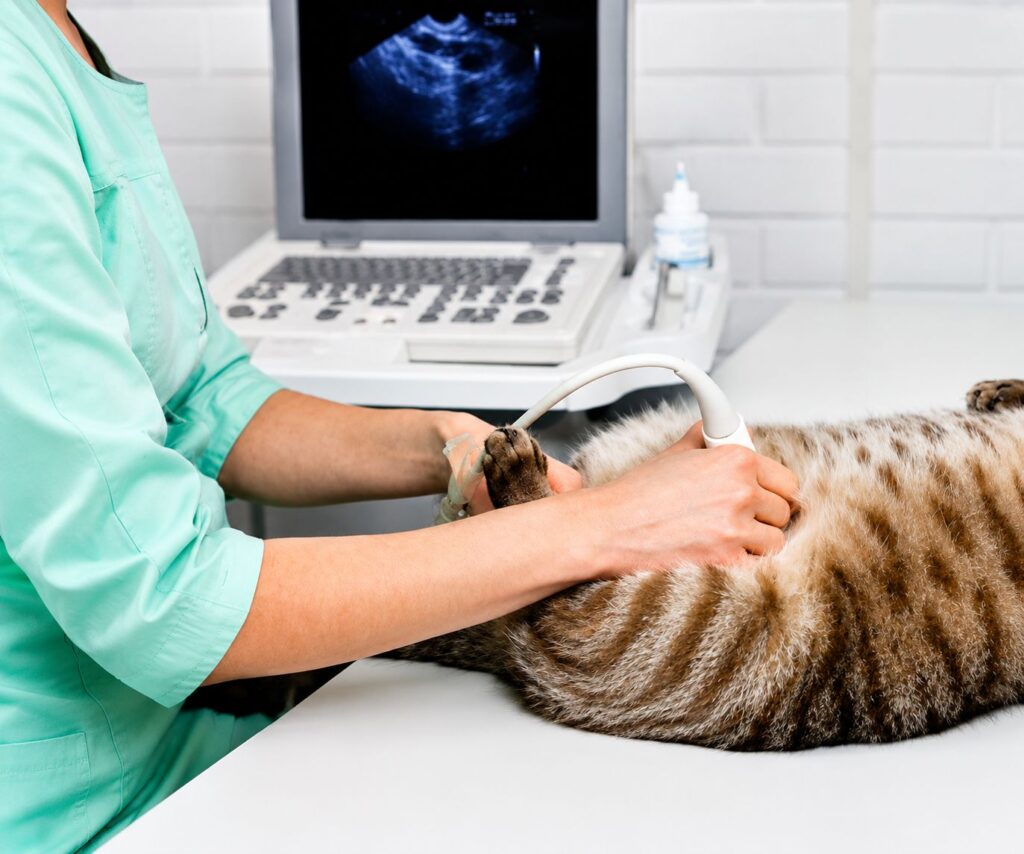
Comfort Paws Veterinary Care currently offers limited in-home ultrasound scans as part of its broader diagnostic services, focused on the most common and clinically useful views a senior cat typically needs. A veterinarian will always explain what a specific scan can and cannot cover before it is scheduled, and full in-home ultrasound capability is expected within the next several months, expanding the range of scans available without leaving your cat’s own home. Until then, a veterinarian will let you know directly whether a concern is best addressed with the scans currently available or whether a referral makes more sense.
How Ultrasound Fits Into a Broader Diagnostic Picture
Bloodwork shows how organs are functioning, while ultrasound shows their physical structure, and together the two often explain a health picture that neither could fully capture on its own. Some findings require equipment or specialist involvement beyond what an in-home visit can provide, and in those cases a veterinarian will recommend a referral rather than attempt to manage everything on-site. A referral is never treated as a failure of the at-home model, simply the right next step for that particular finding.
Signs That May Warrant an Ultrasound Evaluation
- Unexplained weight loss over the past several weeks, even with a normal or increased appetite.
- Vomiting or diarrhea that has become more frequent or has lasted longer than a few days.
- A new or louder heart murmur noticed during a recent exam.
- Visible discomfort when a veterinarian palpates the abdomen during a wellness check.
- Bloodwork results that came back outside the normal range.
Any of these signs are worth mentioning as soon as they appear rather than waiting for the next scheduled visit, since earlier imaging generally means more manageable findings and more available options.
What to Expect During an At-Home Ultrasound Visit
Your cat stays in a room she already knows, which tends to keep her calmer and often makes it easier to get a clear, accurate scan. How mobile vets work compared to a traditional clinic explains more about what changes, and what stays the same, when veterinary care comes to you. A veterinarian will typically review your cat’s recent history and symptoms before beginning, then walk you through the findings once the scan is complete, including what the results mean and what happens next, all in the same visit rather than through a delayed callback.
Getting Answers Without Added Stress
A senior cat ultrasound does not have to mean an anxious car ride or an unfamiliar room. Comfort Paws Veterinary Care brings its in-home ultrasound scans directly into the space your cat already knows, checking for bladder stones or free fluid in a sick cat, so getting an answer never has to add extra stress to her day. Schedule an at-home diagnostic visit to find out whether it’s the right next step for your cat’s care.
FAQs
Q: What can a senior cat ultrasound reveal that bloodwork cannot?
A: A senior cat ultrasound shows the physical structure of organs like the kidneys, liver, and heart, which helps explain what is causing an abnormal bloodwork result. Bloodwork shows that something is off, while ultrasound often shows exactly where and why.
Q: Is ultrasound safe and comfortable for an older cat?
A: Yes. Ultrasound uses sound waves rather than radiation and does not require sedation in most cases, making it a comfortable, non-invasive option even for a senior cat managing other health concerns.
Q: When does a cat need an ultrasound?
A: An ultrasound is typically recommended after unexplained weight loss, ongoing vomiting, a new heart murmur, or abnormal bloodwork results. It is usually a follow-up step rather than a first-line test.
Q: Does Comfort Paws Veterinary Care offer full in-home ultrasound services?
A: Comfort Paws currently offers limited in-home ultrasound scans, with full imaging capability expected within the next several months. A veterinarian will always explain what a specific scan includes before it is scheduled.