
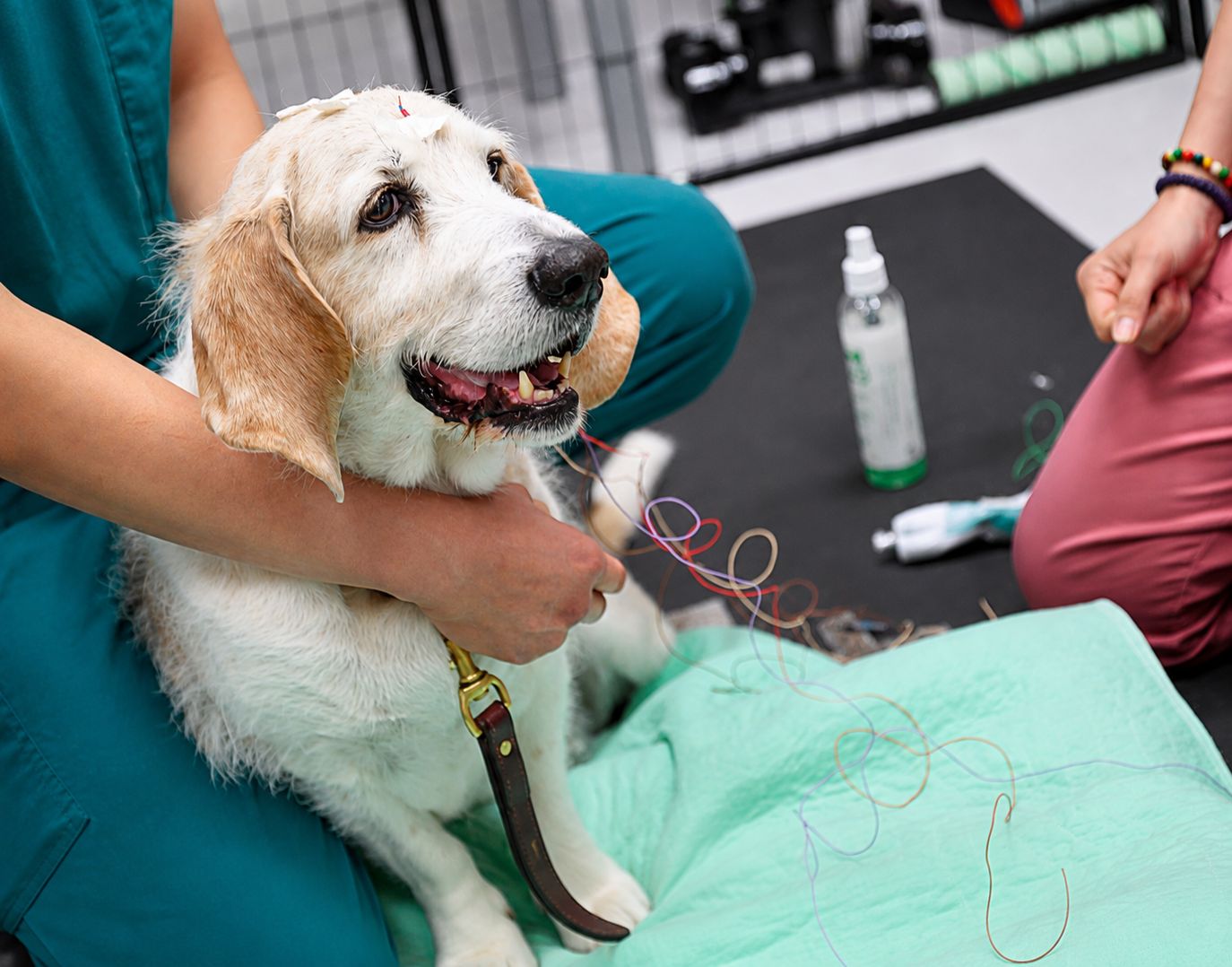
A senior dog who suddenly seems lost in a familiar room, paces at night, or stares blankly at a wall is not simply “getting old” in the way owners often assume. These behaviors can be early signs of cognitive dysfunction in senior dogs, a condition that affects the brain much the way Alzheimer’s disease affects people, and one that is far more common than most owners realize.
This guide covers how to recognize cognitive dysfunction in senior dogs, what causes it, how it gets diagnosed, what can be done to manage it at home, and when a change in behavior should prompt a veterinary evaluation rather than a wait-and-see approach.
Table Of Contents
- 1 Why Cognitive Changes Differ From Normal Aging
- 2 Recognizing the Signs of Cognitive Dysfunction in Senior Dogs
- 3 What Causes Cognitive Dysfunction in Aging Dogs
- 4 How Cognitive Dysfunction Is Diagnosed
- 5 Managing Cognitive Dysfunction at Home
- 6 When Medication or Professional Support May Help
- 7 Signs That Warrant a Veterinary Evaluation Right Away
- 8 How At-Home Visits Help Dogs With Cognitive Changes
- 9 Normal Aging Versus Cognitive Dysfunction: What to Watch For
- 10 Understanding the Signs Is the First Step Toward Support
- 11 FAQs
- 11.1 Q: What are the earliest signs of cognitive dysfunction in senior dogs?
- 11.2 Q: Can cognitive dysfunction in dogs be cured?
- 11.3 Q: How is cognitive dysfunction different from normal aging?
- 11.4 Q: When should I be concerned enough to see a veterinarian right away?
- 11.5 Q: How does an at-home veterinary visit help a dog with cognitive changes?
Why Cognitive Changes Differ From Normal Aging
Every senior dog slows down to some degree, but cognitive dysfunction involves real changes in brain function that affect memory, awareness, and behavior in ways ordinary aging does not. How to care for a senior dog and improve her quality of life covers general aging changes, which makes it easier to see how cognitive dysfunction stands apart from the rest of the aging picture. Because the early signs can be subtle and easy to dismiss as a dog simply having an off day, cognitive dysfunction is frequently underdiagnosed until it has progressed further than it needed to.
Recognizing the Signs of Cognitive Dysfunction in Senior Dogs
Veterinarians often group these signs into a few recognizable categories, which makes them easier for an owner to spot at home.
Disorientation and Confusion
A dog may seem lost in familiar spaces, get stuck in corners, stare at walls or into empty space, or struggle to find the door she has used thousands of times before. This is one of the clearest and most commonly reported signs of cognitive dysfunction in senior dogs.
Sleep, Social, and Habit Changes
A dog with cognitive dysfunction may sleep more during the day and become restless, pace, or vocalize at night. Why senior dogs sometimes pant or struggle to rest at night covers a related but distinct pattern worth ruling out. Some dogs become less interested in greeting family members or playing, while others become unusually clingy or anxious when left alone. A previously reliable, house-trained dog may begin having accidents indoors, not from a lapse in training but because confusion has interfered with a habit that was once automatic, and a noticeable drop in interest toward toys or walks can reflect cognitive changes rather than pain alone.
What Causes Cognitive Dysfunction in Aging Dogs
Cognitive dysfunction develops from real, physical changes in the brain rather than a vague consequence of getting older. Similar to Alzheimer’s disease in people, canine cognitive dysfunction syndrome involves the buildup of certain proteins in the brain along with reduced blood flow and oxygen delivery over time, which gradually affects memory and awareness. The likelihood increases significantly as dogs move further into their senior years, though the exact age of onset varies by breed size and individual dog.
How Cognitive Dysfunction Is Diagnosed
Cognitive dysfunction is generally a diagnosis reached by ruling out other explanations first, rather than confirmed through a single specific test. Because confusion, reduced activity, and behavior changes can also stem from pain, vision or hearing loss, or another underlying illness, a veterinarian typically starts by ruling those out. Chronic pain in dogs is one of the more common conditions that can look like cognitive decline from the outside. A geriatric wellness evaluation, including a full history and physical exam, helps build a complete picture of what might be driving the behavior changes, and this kind of evaluation is part of the broader senior wellness services available for aging dogs.
Managing Cognitive Dysfunction at Home
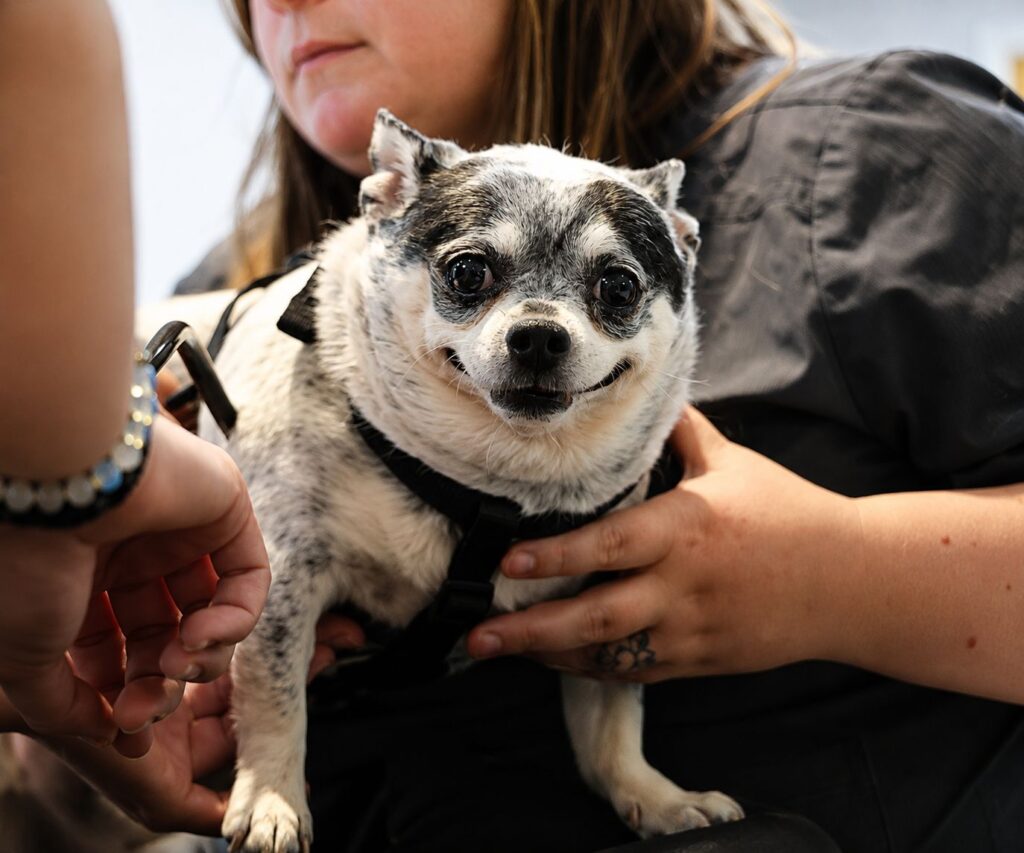
While cognitive dysfunction cannot be reversed, a great deal can be done to support a dog’s comfort and function day to day. Consistent feeding times, walk schedules, and household routines reduce the confusion a dog experiences, since predictability requires less active memory and adaptation from her. Nightlights in hallways, keeping furniture in consistent positions, and blocking off stairs or hazards can reduce disorientation and help prevent injury. Certain diets and supplements are formulated to support brain health in aging dogs, and gentle enrichment, such as slow feeders, scent-based games, or short, low-pressure training sessions, can help her feel more confident even if her performance is slower than it once was.
When Medication or Professional Support May Help
For some dogs, environmental changes alone are not enough. Certain medications and behavioral treatments can meaningfully improve quality of life for a dog with more advanced cognitive dysfunction, and a veterinarian can help determine whether that kind of support fits your dog’s situation. Cognitive dysfunction tends to progress gradually, so a plan that works well today may need adjustment down the road, which is part of why ongoing check-ins matter more than a single early evaluation.
Signs That Warrant a Veterinary Evaluation Right Away
- Sudden, severe disorientation that appears within days rather than developing gradually over months.
- Loss of balance, circling in one direction repeatedly, or a noticeable head tilt.
- A sudden change in appetite, water intake, or bathroom habits alongside behavior changes.
- Signs of pain, such as limping, reluctance to move, or a change in how she carries herself.
- Any behavior change following a fall, injury, or known head trauma.
A gradual shift over months is far more consistent with typical cognitive dysfunction, while a sudden or severe change is more likely to point toward a different, potentially urgent medical issue that needs prompt evaluation rather than a routine wellness visit.
How At-Home Visits Help Dogs With Cognitive Changes
How mobile vets work compared to a traditional clinic explains why an unfamiliar waiting room and car ride can be especially disorienting for a dog already struggling with awareness and memory, and how an at-home visit avoids adding that extra layer of stress. Observing a dog in her own home also gives a veterinarian a more accurate sense of how she actually behaves day to day, rather than how she reacts under the added stress of an unfamiliar environment, often revealing patterns that would never show up during a brief clinic exam.
Normal Aging Versus Cognitive Dysfunction: What to Watch For
Behavior |
Typical Normal Aging |
Possible Cognitive Dysfunction |
| Activity level | Gradually slower, still engaged | Sudden loss of interest in familiar activities |
| Navigation | Occasional hesitation on stairs | Getting lost or stuck in familiar rooms |
| Sleep pattern | Sleeps more overall | Awake and restless at night, sleeps more by day |
| House training | Remains reliable | New accidents without a clear physical cause |
| Social behavior | Mild changes in energy | New anxiety, clinginess, or withdrawal |
Understanding the Signs Is the First Step Toward Support
Recognizing cognitive dysfunction in senior dogs early makes it possible to put support in place while it can still do the most good for her comfort and quality of life. Comfort Paws Veterinary Care evaluates and supports aging dogs in the calm of their own home, where an accurate picture of what is really going on is easier to see. Schedule an at-home senior wellness visit if your dog has started showing any of these changes.
FAQs
Q: What are the earliest signs of cognitive dysfunction in senior dogs?
A: Early signs of cognitive dysfunction in senior dogs often include mild disorientation in familiar spaces, changes in sleep patterns, and reduced interest in activities she once enjoyed. These signs can be subtle at first and easy to mistake for normal aging.
Q: Can cognitive dysfunction in dogs be cured?
A: No, but it can often be managed. Environmental adjustments, routine, diet, and in some cases medication can meaningfully improve a dog’s comfort and quality of life even though the underlying condition cannot be reversed.
Q: How is cognitive dysfunction different from normal aging?
A: Normal aging generally involves gradual physical slowing, while cognitive dysfunction involves real changes in memory, awareness, and behavior, such as getting lost in familiar places or disrupted sleep-wake cycles.
Q: When should I be concerned enough to see a veterinarian right away?
A: A sudden, severe change in behavior, loss of balance, circling, or a head tilt should be evaluated promptly, since these may point to a different medical issue rather than typical, gradually progressing cognitive dysfunction.
Q: How does an at-home veterinary visit help a dog with cognitive changes?
A: An at-home visit lets a veterinarian observe your dog in her own environment, without the added stress and disorientation of a clinic visit, which often results in a more accurate picture of what she is actually experiencing day to day.