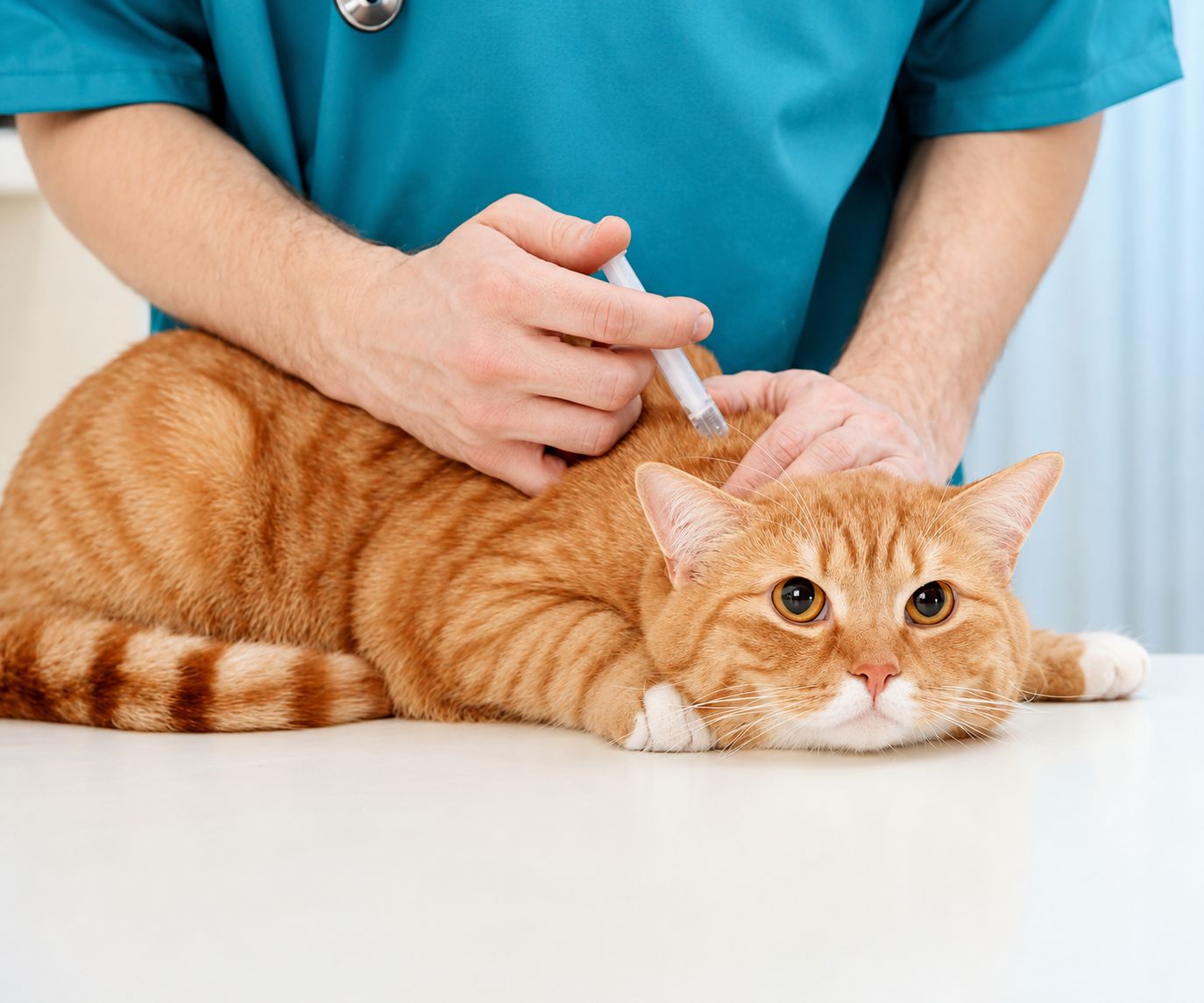
Many cat owners assume vaccines stop mattering once a cat gets older or lives strictly indoors. In reality, the core vaccinations senior cats need do not expire with age, and an indoor lifestyle does not remove the risks these vaccines are designed to prevent. This guide covers which vaccines still matter, how often boosters are due, what changes with a chronic illness, and how an at-home visit handles the process from start to finish.
A cat who finds car rides and waiting rooms stressful does not have to skip this kind of care. A calm, familiar environment can make the visit shorter and far less upsetting for a cat who no longer tolerates travel the way she once did.
Table Of Contents
- 1 Why Vaccinations Still Matter for Senior Cats
- 2 The Core Vaccines Senior Cats Actually Need
- 3 Why Comfort Paws Focuses on Core Vaccines for Cats
- 4 How Often Senior Cats Need Vaccine Boosters
- 5 Special Considerations for Vaccinating Senior or Chronically Ill Cats
- 6 Signs Your Senior Cat Should Be Evaluated Before Her Next Vaccine
- 7 How At-Home Vaccination Visits Work With Comfort Paws Veterinary Care
- 8 Comparing Core and Non-Core Vaccine Recommendations for Cats
- 9 Protecting a Senior Cat Should Not Mean a Stressful Trip
- 10 FAQs
- 10.1 Q: What are the core vaccinations senior cats need?
- 10.2 Q: Does an indoor senior cat still need to be vaccinated?
- 10.3 Q: How often does a senior cat need vaccine boosters?
- 10.4 Q: Can a cat with a chronic illness still be vaccinated?
- 10.5 Q: Why does Comfort Paws Veterinary Care not offer the feline leukemia vaccine?
Why Vaccinations Still Matter for Senior Cats
Aging does not switch off exposure risk, even for a cat who rarely leaves the house. A senior cat’s immune system gradually becomes less efficient at mounting a fast response to disease, so skipping boosters because of age works against her rather than for her. Vaccines are also part of a broader preventive strategy alongside regular wellness exams and bloodwork that catch developing conditions early, so a vaccine visit is worth treating as part of that fuller picture rather than a stand-alone errand.
The Core Vaccines Senior Cats Actually Need
Rabies Vaccination
Rabies vaccination is legally required in most areas and protects against a disease that is fatal and transmissible to people. Even a cat who never goes outside can be exposed through an open window, a door left ajar, or contact with a bat that finds its way indoors, which is why this vaccine stays non-negotiable regardless of lifestyle.
FVRCP: Protection Against Three Serious Feline Viruses
FVRCP protects against feline viral rhinotracheitis, calicivirus, and panleukopenia, three highly contagious illnesses that can affect cats of any age. Panleukopenia can be life-threatening, and because these viruses can be carried indoors on clothing or shoes, an entirely indoor lifestyle does not eliminate exposure risk the way many owners assume.
Why Comfort Paws Focuses on Core Vaccines for Cats
Core vaccines are recommended for essentially all cats because the risk they address is broad and serious enough to apply almost universally, while non-core vaccines are typically reserved for cats whose specific lifestyle justifies them, such as regular outdoor access. Feline leukemia virus spreads primarily through prolonged close contact between cats, which makes it a lifestyle-based risk rather than a universal one. Comfort Paws Veterinary Care does not carry the feline leukemia vaccine as part of its standard senior wellness protocol, and instead focuses core protection on rabies and FVRCP, since panleukopenia coverage within FVRCP already addresses one of the most serious risks facing indoor cats. Vaccination is just one piece of the broader range of at-home veterinary services built around this same core-first philosophy, and if your cat’s living situation ever changes in a way that meaningfully increases her exposure risk, that is worth discussing directly at a wellness visit.
How Often Senior Cats Need Vaccine Boosters
After the initial vaccine series earlier in life, most core vaccines for adult and senior cats are boosted on a schedule of roughly one to three years, depending on the specific formulation used and local rabies regulations. A senior cat vaccine schedule should never be assumed from memory alone, since the exact interval depends on which product was used previously. A cat with a consistent vaccine history may follow a predictable schedule, while one with gaps in her records or a recent move may need a slightly different approach to confirm protection has not lapsed. Subtle shifts in behavior as a cat ages are worth tracking alongside her vaccine record, since both paint a fuller picture of how she is doing overall.
Special Considerations for Vaccinating Senior or Chronically Ill Cats
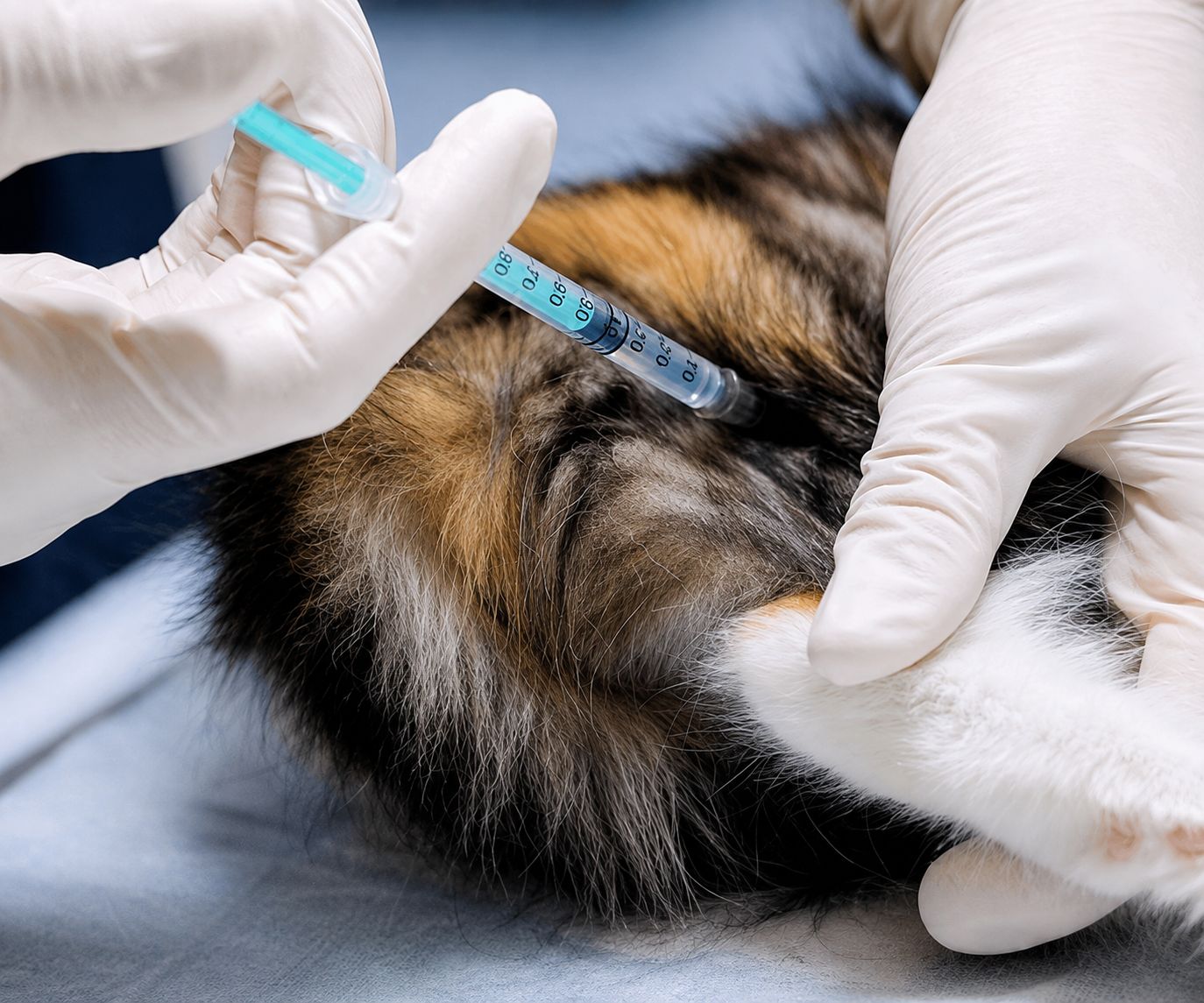
A senior cat with an existing health condition is not automatically excluded from vaccination, though the approach often needs to be more deliberate. A brief physical exam before a vaccine confirms she is currently healthy enough to mount a normal immune response, which matters more for senior cats simply because more can be quietly developing beneath the surface. A cat managing kidney disease, hyperthyroidism, or another chronic condition can typically still be vaccinated on schedule, though your veterinarian may factor in current bloodwork and overall stability first. The goal is never to skip vaccination reflexively because of a chronic diagnosis, but to make sure the timing genuinely fits her current health picture, which is exactly why the core vaccinations senior cats need should always be reviewed alongside her full medical history.
Signs Your Senior Cat Should Be Evaluated Before Her Next Vaccine
- A noticeable drop in appetite or sudden weight loss before a scheduled vaccine.
- New lethargy, hiding, or activity that seems lower than her normal baseline.
- Vomiting, diarrhea, or a recent change in litter box habits.
- Visible changes in coat condition, such as increased shedding or matting.
- Any blood pressure or cardiac concern that has not been reassessed in several months.
If any of these changes have shown up since her last visit, call ahead rather than waiting until the appointment, since your veterinarian may want to evaluate her first and adjust the plan for that day. A sudden change in appetite is one of the clearest examples worth addressing before, not during, a routine vaccine visit.
How At-Home Vaccination Visits Work With Comfort Paws Veterinary Care
A typical at-home visit includes a physical exam, a review of your cat’s health history and recent changes, and the vaccines she is currently due for, all completed in a room she already knows. How mobile vets work compared to a traditional clinic walks through what tends to differ, and what stays the same, between an at-home visit and a clinic appointment. A senior cat who becomes visibly distressed in a carrier or car often shows far less stress at home, which can make an accurate exam easier and the visit less taxing on a body already managing the normal effects of aging.
Comparing Core and Non-Core Vaccine Recommendations for Cats
Vaccine |
Classification |
Typically Recommended For |
Offered at Comfort Paws |
| Rabies | Core | All cats, regardless of lifestyle | Yes |
| FVRCP (rhinotracheitis, calicivirus, panleukopenia) | Core | All cats, regardless of lifestyle | Yes |
| Feline Leukemia (FeLV) | Non-Core | Cats with regular outdoor access or close contact with unfamiliar cats | Not part of standard protocol |
Protecting a Senior Cat Should Not Mean a Stressful Trip
Understanding the core vaccinations senior cats need takes the guesswork out of one of the most routine, and most important, parts of aging well as a cat. Comfort Paws Veterinary Care built its model around bringing this kind of preventive care into your home, so a vaccine visit never has to add stress for your cat or extra disruption to your day. Schedule an at-home wellness and vaccine visit to keep her core protection current without a trip to a clinic.
FAQs
Q: What are the core vaccinations senior cats need?
A: The core vaccinations senior cats need are rabies and FVRCP, which protects against feline viral rhinotracheitis, calicivirus, and panleukopenia. These are recommended for nearly all cats regardless of lifestyle, including cats who live entirely indoors.
Q: Does an indoor senior cat still need to be vaccinated?
A: Yes. Diseases like panleukopenia can be carried indoors on clothing or shoes, and rabies exposure is possible through an open window or contact with a stray bat, so an indoor lifestyle reduces but does not eliminate risk.
Q: How often does a senior cat need vaccine boosters?
A: Most core vaccines are boosted every one to three years depending on the specific product used and local regulations, though the exact interval depends on your cat’s individual vaccination history.
Q: Can a cat with a chronic illness still be vaccinated?
A: In most cases, yes. Cats managing conditions like kidney disease or hyperthyroidism can typically stay on a normal vaccine schedule, though your veterinarian may review current bloodwork and overall stability first.
Q: Why does Comfort Paws Veterinary Care not offer the feline leukemia vaccine?
A: Feline leukemia spreads through prolonged close contact between cats, which makes it a lifestyle-based risk rather than a universal one. Comfort Paws focuses its standard protocol on rabies and FVRCP, and can discuss additional options individually if a cat’s living situation changes.