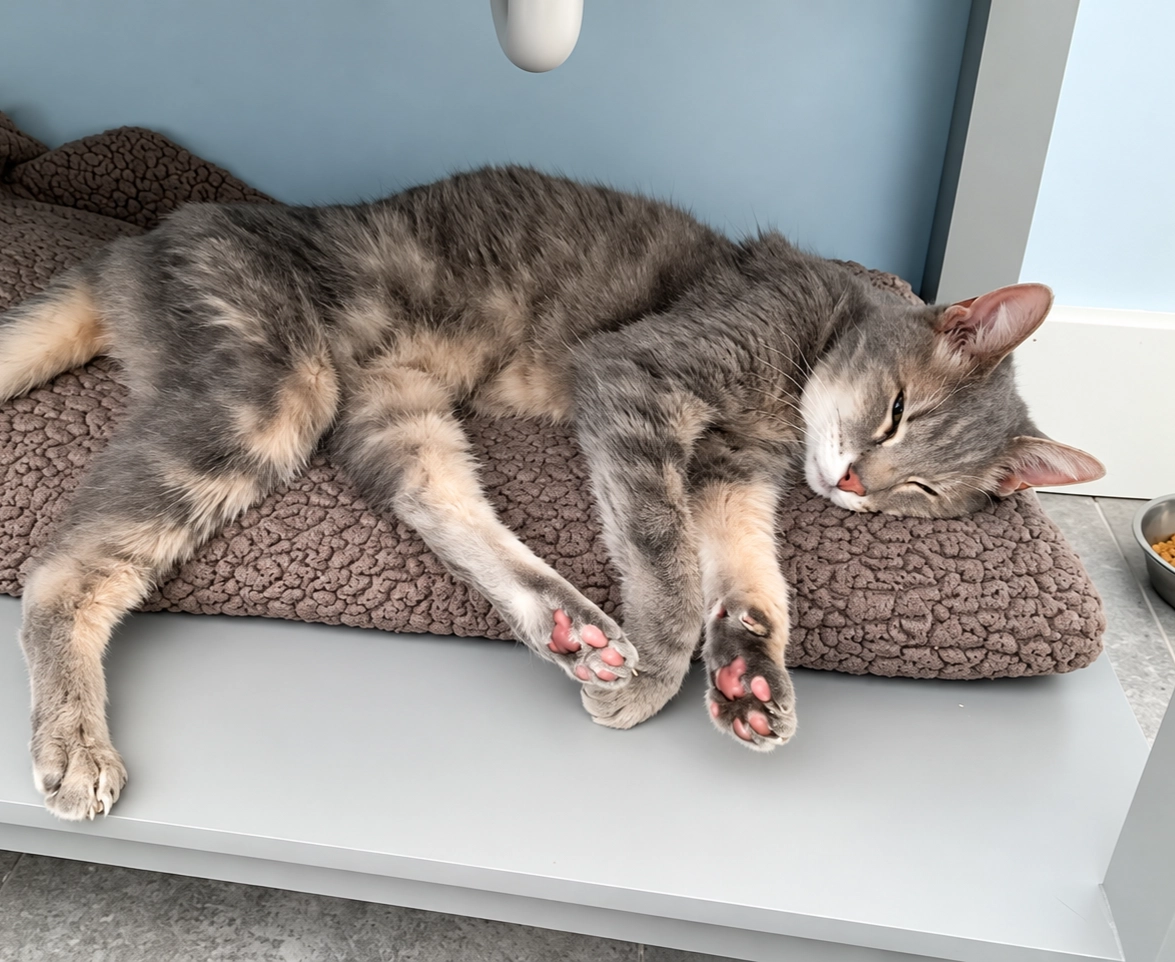
Watching an older cat eat well and still lose weight is one of the more confusing experiences a pet owner can face. It is tempting to chalk a thinner senior cat up to simply slowing down, but the symptoms of hyperthyroidism in cats often masquerade as normal aging, even as the body works against itself, burning through calories faster than the cat can replace them while its appetite stays strong or grows more demanding by the week.
The reassuring part is that this is rarely a case of quiet, unstoppable decline. Hyperthyroidism is one of the more treatable conditions that shows up in senior cats, and most cats respond well once the excess thyroid hormone is brought back under control. What matters most is catching the pattern early, because the same restlessness and appetite change that gets waved off as “just getting older” is often the clearest clue that something treatable is happening underneath.
This guide covers how hyperthyroidism develops in cats, the physical and behavioral signs that set it apart from ordinary aging, how it is diagnosed and treated, and when it is time to have a veterinarian evaluate your cat at home.
Table Of Contents
- 1 Understanding Hyperthyroidism in Cats
- 2 Signs and Symptoms of Hyperthyroidism in Cats
- 3 Hyperthyroidism Versus Normal Aging
- 4 Diagnosing and Treating Hyperthyroidism in Cats
- 5 When to Seek Veterinary Evaluation
- 6 Senior Cat Care Mobile Services for Hyperthyroidism
- 7 Keeping Your Cat Steady Through Diagnosis and Treatment
- 8 Sources
- 9 Frequently Asked Questions
- 9.1 Q: What are the symptoms of hyperthyroidism in cats?
- 9.2 Q: Can senior cat weight loss be something other than hyperthyroidism?
- 9.3 Q: Is hyperthyroidism in cats curable?
- 9.4 Q: How is thyroid disease in cats diagnosed?
- 9.5 Q: Can hyperthyroidism be diagnosed and monitored during an at-home vet visit?
Understanding Hyperthyroidism in Cats
The thyroid gland sits low in a cat’s neck and normally releases a steady, measured amount of thyroid hormone to keep metabolism running at a healthy pace. In most affected cats, one or both lobes of the gland develop a small, usually benign growth called an adenoma, and that growth starts pumping out far more thyroid hormone than the body needs. Because thyroid hormone touches nearly every system, from heart rate to digestion to muscle tone, the excess acts like a metabolic accelerator that never lets up. This is often called a cat overactive thyroid, one of the more common thyroid problems in cats seen in general practice.
The condition typically appears in mature and older cats, and what causes hyperthyroidism in cats is not fully understood, though diet, environment, and genetics are all thought to play a role. It rarely develops from anything an owner did or failed to do.
Why the Early Stages Are Easy to Miss
Cats are instinctively private about illness, and a cat in the early stages of hyperthyroidism often looks like it is thriving rather than struggling. A sudden burst of energy or a heartier appetite can read as a good sign in an older cat, which is exactly why so many cases are not caught until the weight loss becomes hard to ignore. Regular senior cat wellness exams designed to catch early disease are often what surface hyperthyroidism before an owner would have noticed anything wrong at home.
Signs and Symptoms of Hyperthyroidism in Cats
The symptoms of hyperthyroidism in cats tend to fall into two overlapping categories: what the body is doing, and how the cat is behaving. Neither on its own is definitive, but together they build a pattern worth acting on.
Physical Signs
The clearest signal is usually weight loss that continues or worsens despite a normal or increased appetite, often the single most reported symptom. The coat can turn greasy, unkempt, or thin as the body burns through nutrients faster than it can maintain healthy skin and fur, and thirst and urination often increase in a pattern that looks similar to kidney or diabetic changes, which is why bloodwork rather than guesswork is what tells the two apart. Some cats also develop occasional vomiting or loose stool after meals as digestion speeds up along with everything else, and a veterinarian may notice a rapid or irregular heartbeat during a routine physical exam, since excess thyroid hormone puts real strain on the heart and can eventually affect blood pressure, similar to what is described in how high blood pressure develops in cats.
Behavioral Signs
Behaviorally, owners often notice restlessness or new vocalizing, especially at night, that gets mistaken for confusion or ordinary aging-related anxiety. A cat that was previously easygoing may start pacing or acting hyperactive in a way that looks like a burst of youthful energy rather than a symptom of illness, or grow irritable and less tolerant of handling. Sleep patterns often shift as well, with a cat that used to nap most of the day suddenly wandering the house at odd hours.
Hyperthyroidism Versus Normal Aging
Because both normal aging and hyperthyroidism can involve a thinner, more vocal cat, it helps to see the two side by side.
Area |
Typical Aging |
Possible Hyperthyroidism |
| Appetite | Gradually decreases or stays steady. | Stays strong or increases noticeably, sometimes described as ravenous. |
| Weight | Slow, mild loss over months or years. | Steady or rapid loss despite normal or increased food intake. |
| Energy Level | Slows down, sleeps more, less interested in play. | Increases, restlessness, pacing, or new nighttime activity. |
| Coat Condition | Gradually thins or grays with age. | Becomes greasy, matted, or unkempt over a short period. |
| Thirst and Urination | Stays roughly consistent. | Increases noticeably, often alongside weight loss. |
Diagnosing and Treating Hyperthyroidism in Cats
Knowing how to treat hyperthyroidism in cats starts with confirming the diagnosis. Thyroid disease in cats is confirmed with a blood test that measures circulating thyroid hormone levels, typically alongside a broader senior wellness panel to rule out concurrent kidney or liver changes. Comfort Paws offers in-home bloodwork and thyroid panel testing as part of its diagnostic services, which spares an already sensitive senior cat the added stress of a clinic visit and carrier ride before the sample is even drawn.
Once diagnosed, most cats are started on methimazole, a daily medication that controls hormone production without surgery. The 2016 AAFP Guidelines for the Management of Feline Hyperthyroidism list four options: radioactive iodine, medication, surgery and an iodine restricted diet. Some cats do well on a prescription iodine-restricted diet instead, though it only works if the cat eats nothing else. The Merck Veterinary Manual notes that most hyperthyroid cats fed only an iodine restricted diet become euthyroid in 8 to 12 weeks. For a more permanent option, radioactive iodine therapy can cure the condition in a single treatment through referral to a specialized facility, while traditional surgery is used far less often today. The AAFP guidelines call radioiodine the treatment of choice for most cats and describe radioiodine and surgery as potentially permanent cures, while medication and diet control the disease. Whichever path fits your cat, ongoing monitoring matters as much as the initial diagnosis, since hormone levels and kidney function both need periodic rechecking.
When to Seek Veterinary Evaluation
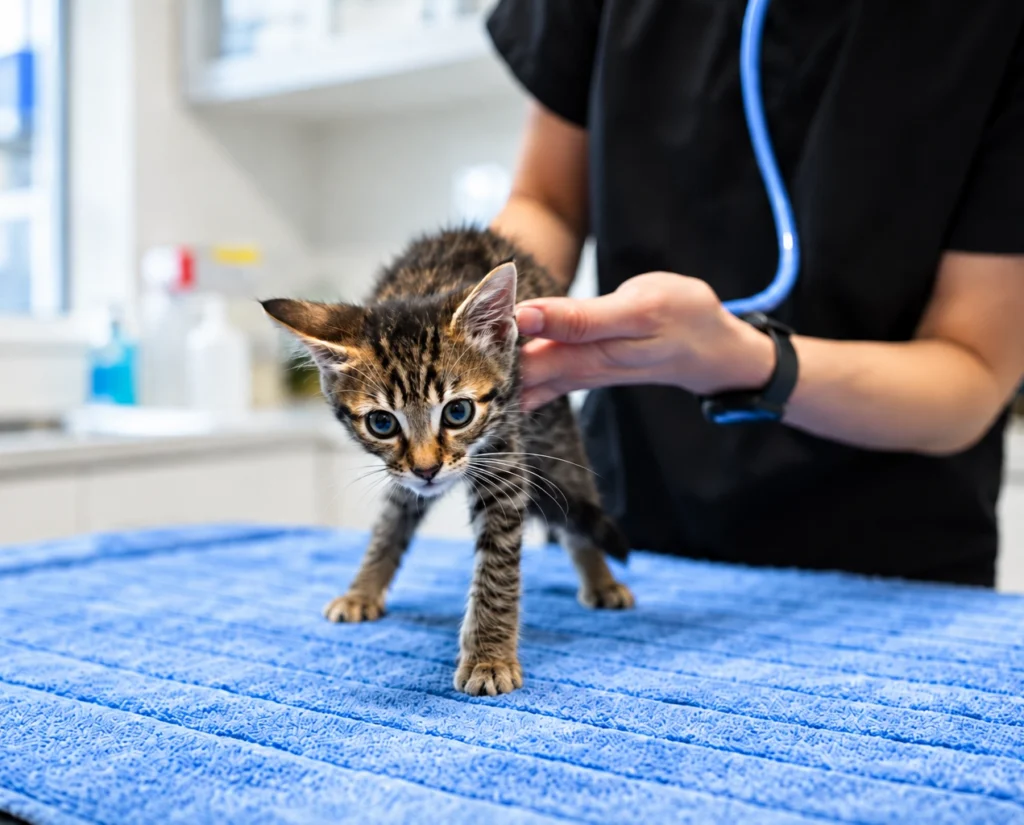
The symptoms of late-stage hyperthyroidism in cats, a racing heart, labored breathing, or sudden collapse, are what untreated cases can progress toward, which is why the signs below are worth acting on long before that point.
- Weight loss that continues for more than a few weeks despite a good appetite, rather than leveling off on its own.
- Increased thirst or urination severe enough to change litter box habits or water bowl refills.
- A resting heart rate that feels unusually fast, or breathing that seems labored even at rest.
- New aggression, restlessness, or nighttime vocalizing that represents a real change from your cat’s usual temperament.
- Vomiting or diarrhea that lasts more than a day, especially paired with any of the signs above.
Any of these on their own may have a simple explanation, but together they are worth a sick visit rather than a wait-and-see approach, since untreated hyperthyroidism puts ongoing strain on the heart and kidneys the longer it continues.
Senior Cat Care Mobile Services for Hyperthyroidism
A hyperthyroid cat is often already anxious and easily overstimulated, which makes a stressful clinic visit counterproductive. Comfort Paws’ in-home blood pressure monitoring happens during a calm home visit rather than after a frightening car ride, since a racing heart from carrier stress alone can skew both blood pressure and thyroid readings.
There is also a practical reason to keep monitoring at home long term. Hyperthyroidism can unmask underlying kidney disease in senior cats that the thyroid condition was hiding, since an overactive thyroid can temporarily boost kidney blood flow and make function look better than it really is. Merck states that restoring a normal thyroid state can unmask kidney disease, even in cats with normal kidney values beforehand, and the AAFP guidelines note that treatment does not cause kidney damage. Comfort Paws’ at-home model lets these follow-up panels happen on a schedule that fits your cat’s comfort, not a clinic’s booking calendar.
Keeping Your Cat Steady Through Diagnosis and Treatment
A hyperthyroidism diagnosis can feel unsettling at first, especially when the symptoms crept in disguised as ordinary aging. In most cases, though, this condition has real, effective treatment options and a good outlook once hormone levels are back in a healthy range. If your cat has been eating well but losing weight, acting restless, or showing any of the signs above, Comfort Paws Veterinary Care provides compassionate, in-home evaluation across Brooklyn and the wider New York City area. Reach out to schedule a consultation so your cat can be assessed in the calm of your own home.
Sources
Carney et al., 2016 AAFP Guidelines for the Management of Feline Hyperthyroidism, Journal of Feline Medicine and Surgery (2016).
Peer reviewed professional guidelines.
Supports the four treatment options, radioiodine as the treatment of choice, permanent cures and the point that treatment does not cause kidney damage.
Merck Veterinary Manual, Hyperthyroidism in Animals (accessed 2026).
Peer reviewed veterinary reference.
Supports the iodine restricted diet timeline and the unmasking of kidney disease.
Frequently Asked Questions
Q: What are the symptoms of hyperthyroidism in cats?
A: The earliest sign is usually weight loss that continues even though your cat is eating normally or more than usual. You may also notice increased thirst, a scruffier coat, or new restlessness, especially at night.
Q: Can senior cat weight loss be something other than hyperthyroidism?
A: Yes, weight loss in an older cat can also point to kidney disease, diabetes, or dental pain, which is why a blood panel rather than guesswork is the right next step.
Q: Is hyperthyroidism in cats curable?
A: It can be, particularly with radioactive iodine therapy, which resolves the condition in a single treatment for many cats. Daily medication and diet management are not cures on their own, but they control the condition effectively for cats who are not candidates for that option.
Q: How is thyroid disease in cats diagnosed?
A: Your veterinarian will run a blood test that measures thyroid hormone levels, usually alongside a broader senior panel to check kidney and liver function at the same time. A physical exam checking heart rate and the neck for an enlarged thyroid gland is typically part of the same visit.
Q: Can hyperthyroidism be diagnosed and monitored during an at-home vet visit?
A: Yes, blood draws, blood pressure checks, and follow-up panels can all be done in the comfort of your home, which keeps a hyperthyroid cat calmer and often gives more accurate readings than a stressful clinic trip. This also makes it easier to stay consistent with the rechecks that ongoing treatment requires.