The symptoms of pancreatitis in cats are easy to overlook, so holiday food often gets more blame than it deserves. A cat that skips breakfast, hides under the bed, or vomits once after a busy gathering may have an upset stomach, or may be dealing with something more serious, and the early signs can look exactly the same. Rich food plays a smaller role than most people expect, so the most useful thing you can do is learn which changes call for a visit from your veterinarian.
This guide covers the symptoms of pancreatitis in cats, why the signs are so vague, what is known about holiday food and the pancreas, how veterinarians confirm the diagnosis, what treatment involves, when to call the vet, how quality of life shapes hard decisions, and how at-home care in Brooklyn fits in.
Table Of Contents
Symptoms of Pancreatitis in Cats
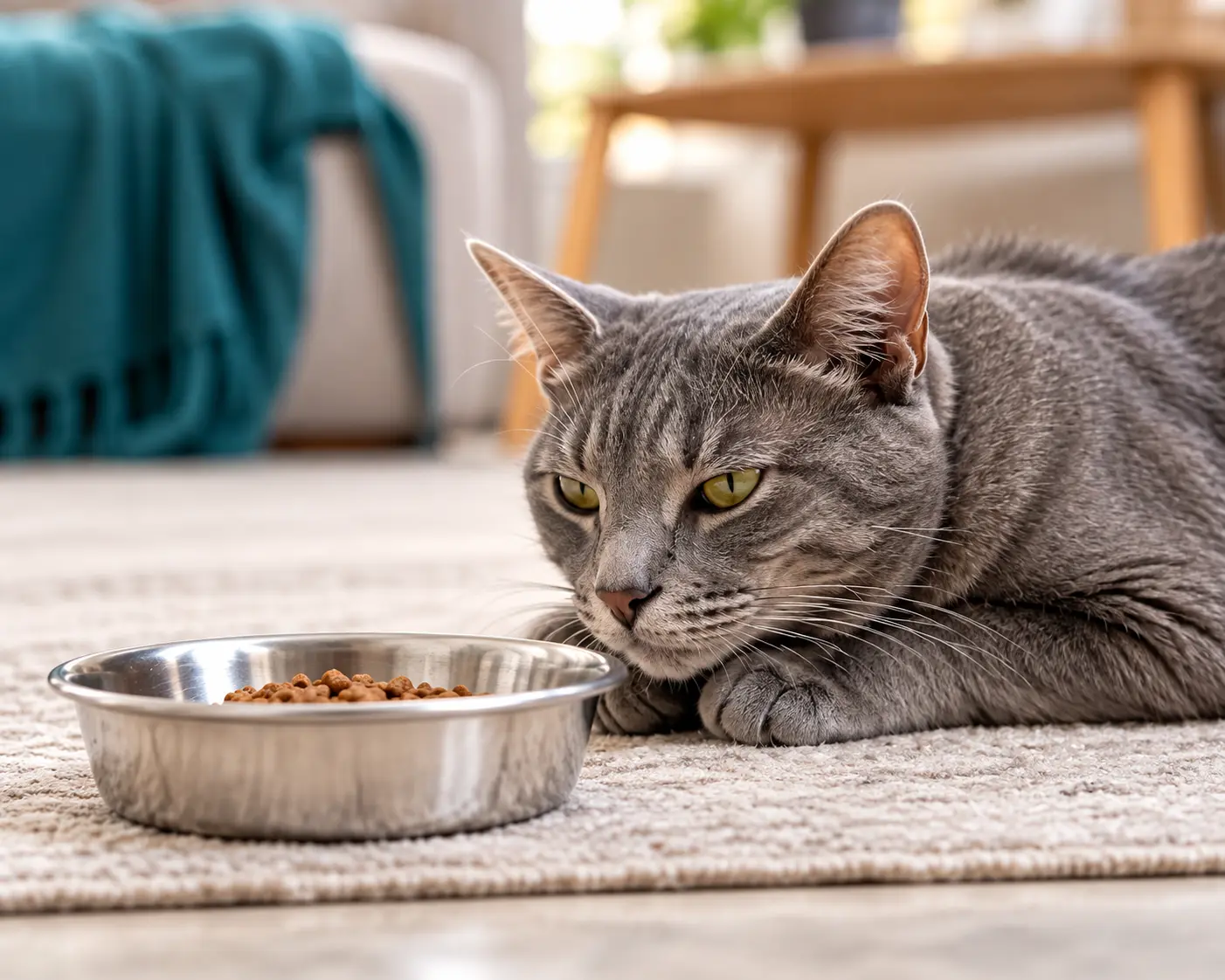
The first sign is usually a cat that is quieter than normal and not eating with the usual enthusiasm. The Cornell Feline Health Center describes lethargy and a reduced appetite as the main signs of feline pancreatitis. About half of affected cats also vomit or lose weight, and some develop diarrhea.
Abdominal pain, the hallmark of this disease in people and dogs, is reported in only about 10 to 30 percent of cats. Cornell suggests that this may reflect how well cats hide pain. A cat that is hurting often shows it by sitting hunched, avoiding the lap, or retreating to a closet, and our guide to subtle signs that a cat is in pain lists more of these quiet changes.
Why the Signs Are So Vague
Pancreatitis in cats does not follow one pattern. Chronic cases can be mild enough to go nearly unnoticed for weeks, while a severe acute attack can make a cat critically ill within a short time. VCA Animal Hospitals notes that severe attacks can lead to shock, and that the vague signs are exactly what make the diagnosis hard.
The disease also rarely travels alone. Both Cornell and VCA link it with inflammatory bowel disease, liver and gallbladder disease, and diabetes, and VCA mentions that pancreatic, liver, and intestinal inflammation together is sometimes called triaditis. A senior cat with one of these conditions may already be eating less, so a flare of pancreatitis can hide inside an illness the family already knows about.
Holiday Food and the Pancreas
The title question deserves a careful answer. Neither Cornell nor VCA names diet as a proven cause of feline pancreatitis. Cornell reports that no obvious cause is found in over 95 percent of cases and that owners have no effective way to prevent it, and VCA says it usually appears spontaneously. A fatty turkey skin cannot be blamed for every sick cat, and no one can promise that a careful holiday menu will keep a cat safe.
Food still becomes a problem in practical ways. Rich scraps can cause vomiting and diarrhea that look like pancreatitis, or that hide it, and a cat that fills up on table scraps may refuse its regular meals for a day and delay the moment someone notices a real appetite problem. Because low fat, easily digested food is part of treatment, it also makes sense to keep rich leftovers away from a cat that already seems unwell.
The holidays create a second problem that has nothing to do with the menu. Guests, noise, and closed doors mean fewer people are watching the cat closely.
How Vets Confirm Pancreatitis
No single test is definitive. Cornell explains that veterinarians combine clinical signs, blood tests, and imaging, and that routine bloodwork is often normal or shows only mild liver enzyme changes. The most specific blood test measures feline pancreatic lipase, but it can miss mild or chronic cases, and many affected cats test negative, so the diagnosis is sometimes presumptive. Our bloodwork and diagnostics page lists the testing available at home. Ultrasound by an experienced veterinarian can show changes in up to two thirds of cats.
The table below shows how common signs line up with what a veterinarian looks at.
What You May See |
What It May Mean |
What Your Vet May Check |
| Hiding or low energy | An early and common sign, also seen with many other illnesses | Temperature, hydration, and overall exam |
| Eating less | One of the main signs, and early feeding improves outcomes | Body condition and weight trend |
| Vomiting | Seen in about half of cats, and also caused by kidney disease, thyroid disease, or hairballs | Bloodwork and a review of recent food |
| Weight loss | May be gradual in chronic cases | Monthly home weights compared with past visits |
| Belly discomfort | Reported in a minority of cats because many hide it | A gentle abdominal exam |
Treatment and Supportive Care
Pancreatitis in Cats Treatment at Home and in Hospital
Cornell lists four goals for pancreatitis in cats treatment: correcting dehydration, controlling nausea, easing pain, and providing nutrition. Anti-nausea medicine is recommended even when a cat is not vomiting, appetite stimulants may help, and a feeding tube is sometimes placed if a cat will not eat. Cornell also states that steroids and antibiotics are generally not needed unless another disease is present.
Mild cases may be managed at home, while severe cases may need hospitalization with intravenous fluids. VCA describes hospital stays of about two to four days for severe attacks. Comfort Paws can examine a stable cat during a sick visit at home, review medications, and follow progress in your living room, and the veterinarian will say plainly when a cat needs a level of care that a house call cannot provide.
What Recovery Can Look Like
Most cats with mild to moderate disease recover well, though relapses are possible. Repeated or severe episodes can leave a cat with long term problems such as diabetes, so cats with a history of pancreatitis benefit from regular wellness exams and monitoring that track weight and appetite over time.
When to Call the Vet
A cat does not have to look dramatically ill to need prompt attention, since appetite loss in cats can become serious quickly. Call your veterinarian if you notice any of the following.
- Your cat has refused food for more than a day, or eats only a few bites and walks away.
- Your cat vomits more than once, or vomits and then hides or seems unusually still.
- Your cat is limp, weak, or breathing faster than usual, which can signal a severe attack and calls for immediate care.
- Your cat has lost weight over several weeks, even if the appetite seems normal.
- Your cat has diabetes, bowel disease, or liver disease and suddenly seems worse.
Seeing your cat at home lets the veterinarian judge quickly whether home care is enough.
Quality of Life and Hard Decisions
Most cats do not reach this point, but for a few older cats with other chronic illness, repeated flares wear down comfort over time. People who search for pancreatitis in cats when to euthanize are usually asking about quality of life, and that question deserves a direct answer.
No single sign settles it. A veterinarian looks at whether a cat keeps eating with support, how often nausea and pain return, whether the cat still grooms and seeks company, and how the good days compare with the bad. A quality of life exam puts those observations in order. When comfort is the goal, hospice care for cats can support a cat for as long as that comfort lasts.
Care at Home for Cats in NYC
Many cats hide their illness more in a carrier or exam room, and the trip itself stresses a sick cat. At home, the veterinarian sees the food bowls, the litter box, and the favorite hiding spots, and can ask what your cat ate and did over the past days while standing in the room where it happened. Our overview of the benefits of at-home vet services explains why this suits anxious and senior pets.
Comfort Paws focuses on senior and chronically ill cats across Brooklyn. We do not treat every pancreatitis case at home, and we refer cats that need hospital care.
Looking After Your Cat This Season
Holiday food is reasonable to manage but poor to blame. Keep rich scraps out of reach, and treat a missed meal or a quiet corner as information to act on. If your cat is showing any of these changes and you would like a compassionate assessment at home, Comfort Paws Veterinary Care provides care across Brooklyn and you can contact us to schedule a consultation.
Sources
- Cornell Feline Health Center is part of the Cornell University College of Veterinary Medicine, and its Feline Pancreatitis page covers signs, diagnosis, and treatment.
- VCA Animal Hospitals publishes Pancreatitis in Cats: Symptoms and Treatment, a client guide to causes, diagnosis, and prognosis.
FAQs
Q: What are the symptoms of pancreatitis in cats?
A: The most common signs are low energy and a poor appetite, and about half of affected cats also vomit or lose weight. Many cats show no obvious belly pain, so the signs can be easy to miss. If your cat is eating less than usual, please call your veterinarian.
Q: Can holiday food cause feline pancreatitis?
A: Veterinary sources do not name diet as a proven cause, and most cases have no obvious trigger. Rich scraps can still cause vomiting and diarrhea that look similar, so it is wise to keep them away from your cat.
Q: How is pancreatitis in cats treated?
A: Treatment is supportive and aims to correct dehydration, control nausea and pain, and keep your cat eating. Mild cases may be managed at home, while severe cases may need hospital care.
Q: Can a cat recover from pancreatitis?
A: Most cats with mild to moderate disease recover well, although it can come back. Severe attacks can be life threatening, so a prompt exam matters.
Q: Can Comfort Paws help a cat with pancreatitis at home?
A: Yes, for a stable cat, a Comfort Paws veterinarian can examine your cat at home, discuss medications and diet, and follow progress. If your cat needs hospital care, we will tell you directly and help you plan the next step.