Understanding what causes high blood pressure in cats is crucial for every pet owner. Just like in humans, untreated feline hypertension can lead to serious health complications, from vision loss to kidney failure. Many pet owners might not even realize their feline companion is suffering from this silent condition, making regular check-ups and vigilance incredibly important. Thankfully, with the right knowledge and proactive care, managing high blood pressure in cats is entirely possible, often significantly improving their quality of life.
This comprehensive guide will delve into the root causes of feline hypertension, discuss its symptoms, diagnose it, and explore effective management strategies. Our goal is to empower you with the insights you need to safeguard your cat’s health, ensuring they can enjoy a long and comfortable life.
Table Of Contents
- 1 Understanding Feline Hypertension: A Silent Threat
- 2 What Causes High Blood Pressure in Cats?
- 3 Common Underlying Causes of Hypertension in Cats
- 4 Recognizing the Signs of Hypertension in Cats
- 5 Diagnosing High Blood Pressure in Cats
- 6 Managing High Blood Pressure in Cats
- 7 Prognosis and Living with a Hypertensive Cat
- 8 Prevention and Early Detection
- 9 When to Consider End-of-Life Care
- 10 Conclusion
- 11 FAQs
Understanding Feline Hypertension: A Silent Threat
High blood pressure in cats, medically known as hypertension, refers to the sustained elevation of systemic arterial blood pressure. While a single high reading at the vet’s office might be due to stress (often called ‘white coat hypertension’), consistently elevated readings indicate a more serious underlying issue. It’s a condition that often progresses without overt signs until significant organ damage has occurred, making it a truly silent threat.
Regular monitoring is key, especially for senior pets or those with chronic conditions. Blood pressure checks should be a routine part of your cat’s annual wellness exam, becoming even more frequent as they age or if they have known health issues. Early detection ensures timely intervention, preventing potentially irreversible damage to vital organs.
What Causes High Blood Pressure in Cats?
Identifying what causes high blood pressure in cats is the first step toward effective treatment. Unlike humans, where primary or essential hypertension is common, the vast majority of feline hypertension cases are secondary, meaning they result from an underlying medical condition.
Primary vs. Secondary Hypertension
Primary Hypertension: This is rare in cats and occurs without an identifiable underlying cause. It’s often diagnosed after all other potential causes have been ruled out.
Secondary Hypertension: This is by far the most common type and is a consequence of another disease process. Treating the underlying condition is paramount to managing hypertension effectively.
Common Underlying Causes of Hypertension in Cats
Several conditions are frequently linked to high blood pressure in cats:
1. Chronic Kidney Disease (CKD)
Chronic kidney disease (CKD) is the most prevalent underlying cause of hypertension in cats, accounting for a significant percentage of cases. The kidneys play a vital role in regulating blood pressure by controlling fluid balance, electrolyte levels, and producing hormones like renin. When kidneys are damaged or diseased, their ability to perform these functions is compromised, often leading to elevated blood pressure. This creates a vicious cycle: high blood pressure further damages the kidneys, accelerating the progression of CKD.
2. Hyperthyroidism
Hyperthyroidism, an overactive thyroid gland, is another common culprit. The thyroid hormones directly impact heart rate and contractility, and an excess of these hormones can lead to an increased cardiac output and peripheral resistance, resulting in elevated blood pressure. Hyperthyroidism primarily affects older cats and often presents with other symptoms like weight loss despite a good appetite, increased thirst and urination, and hyperactivity.
3. Diabetes Mellitus
While less common than CKD or hyperthyroidism, diabetes mellitus can also contribute to hypertension in cats. The complex metabolic changes associated with diabetes can affect blood vessel elasticity and kidney function, indirectly leading to higher blood pressure readings. Regular monitoring of diabetic cats for hypertension is essential.
4. Heart Disease
Certain forms of heart disease can cause or exacerbate hypertension. Conditions that affect the heart’s ability to pump blood efficiently can lead to compensatory mechanisms that raise blood pressure. Conversely, hypertension can also put extra strain on the heart, worsening existing cardiac conditions.
5. Adrenal Gland Disorders
Disorders of the adrenal glands, such as hyperaldosteronism (Conn’s syndrome) or pheochromocytoma (a tumor producing excess catecholamines), are less common but can cause severe hypertension in cats. These conditions involve the overproduction of hormones that directly influence blood pressure regulation.
6. Certain Medications
Occasionally, certain medications might lead to elevated blood pressure as a side effect. It’s important to discuss all medications your cat is taking with your veterinarian.
Recognizing the Signs of Hypertension in Cats
As mentioned, high blood pressure is often asymptomatic in its early stages. Many cats show no obvious signs until substantial organ damage, known as Target Organ Damage (TOD), has occurred. This makes proactive screening during routine veterinary visits incredibly important. However, once TOD develops, you might notice various symptoms depending on the affected organ system.
Ocular Signs (Eyes)
One of the most common and dramatic signs of feline hypertension is related to the eyes. High blood pressure can cause blood vessels in the retina to rupture or detach, leading to sudden blindness. Owners might notice:
- Sudden blindness: Your cat may bump into objects, become disoriented, or reluctant to move.
- Dilated pupils: Pupil dilation may be fixed and unresponsive to light.
- Hemorrhage in the eye: Blood might be visible in the front chamber of the eye (hyphema).
- Retinal detachment: This can sometimes be seen as a change in the appearance of the eye itself.
Neurological Signs (Brain)
High blood pressure can strain the blood vessels in the brain, potentially leading to ruptures or hemorrhages. Neurological symptoms might include:
- Seizures: Uncontrolled electrical activity in the brain.
- Behavioral changes: Increased anxiety, disorientation, or lethargy.
- Ataxia (incoordination): Difficulty with balance or walking.
- Head tilt or circling: Indicative of neurological damage.
Renal Signs (Kidneys)
While kidney disease is often a cause of hypertension, the hypertension itself can further damage the kidneys. Signs of worsening kidney function include:
- Increased thirst and urination (polydipsia and polyuria): Though these can also be signs of the underlying CKD or hyperthyroidism.
- Weight loss: Often subtle and gradual.
- Poor coat quality: Dull or matted fur.
- Vomiting or decreased appetite: As toxins build up in the body.
Cardiac Signs (Heart)
Sustained high blood pressure increases the workload on the heart, leading to a thickening of the heart muscle (left ventricular hypertrophy). This can eventually lead to heart failure, with signs such as:
- Lethargy or weakness: Reduced activity levels.
- Difficulty breathing (dyspnea): Open-mouth breathing or increased respiratory effort.
- Coughing: Although less common in cats than dogs with heart disease.
Diagnosing High Blood Pressure in Cats
Diagnosing hypertension in cats involves a combination of careful blood pressure measurements and a thorough investigation for underlying causes.
Measuring Blood Pressure
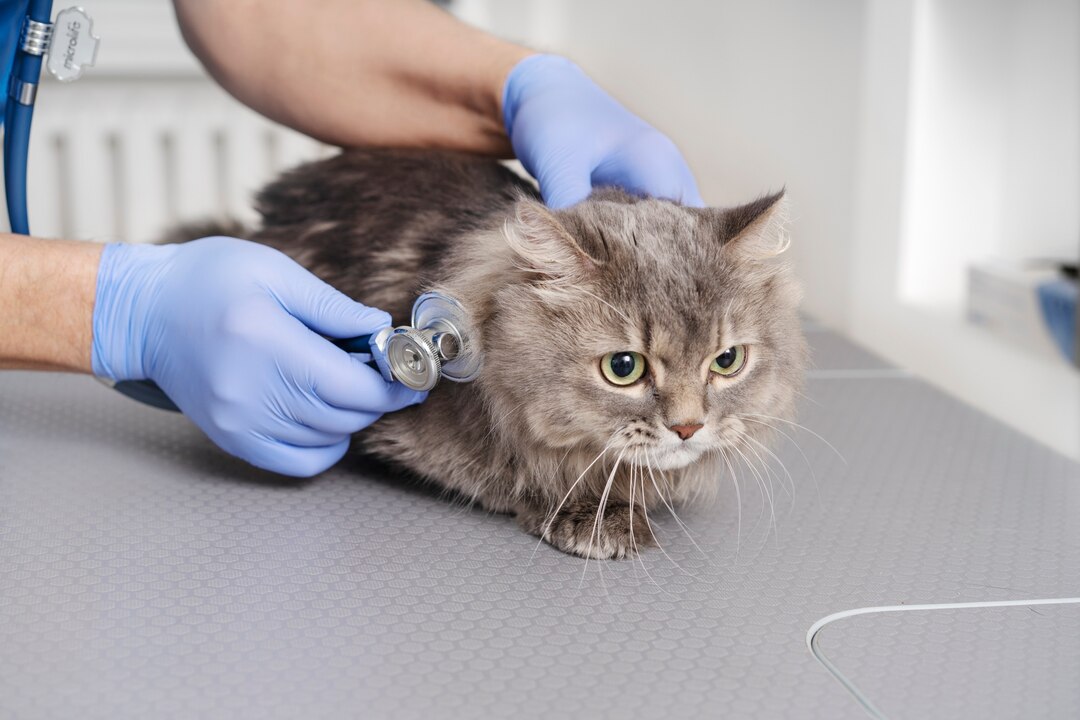
Blood pressure is usually measured non-invasively using a cuff and a Doppler or oscillometric device, similar to methods used in humans. It’s crucial to perform these measurements in a quiet, calm environment to minimize stress and obtain accurate readings. Multiple readings are taken and averaged to get a reliable result. We understand that vet visits can be stressful for many pets, which is why at-home vet services can be invaluable for accurate measurements.
A cat is typically diagnosed with systemic hypertension if their systolic blood pressure is consistently above 160 mmHg.
Full Veterinary Work-Up
Once hypertension is diagnosed, your veterinarian will recommend a comprehensive work-up to identify the underlying cause. This typically includes:
- Blood tests: To assess kidney function (BUN, creatinine, SDMA), thyroid hormone levels (T4), and electrolyte balance.
- Urinalysis: To check for proteinuria (protein in the urine), which is a common indicator of kidney damage.
- Funduscopic examination: A detailed examination of the back of the eye to look for retinal damage, detachment, or hemorrhage.
- Echocardiogram: An ultrasound of the heart to assess heart structure and function, especially if heart disease is suspected.
Our mobile vet service can perform diagnostic tests, including bloodwork and urinalysis right in your home; this reduces stress and helps us gather more accurate baseline data for your pet.
Managing High Blood Pressure in Cats
Managing hypertension in cats involves a multi-pronged approach: treating the underlying cause, directly lowering blood pressure with medication, and providing supportive care. The goal is to reduce blood pressure to a safe level, prevent further organ damage, and improve your cat’s overall well-being.
1. Treating the Underlying Condition
This is the cornerstone of managing secondary hypertension. For example:
- Kidney Disease: Management often includes specialized kidney diets, fluid therapy, and medications to support kidney function. Our senior pet care guide details aspects of this, applicable to many cats with CKD, see how to care for a senior dog.
- Hyperthyroidism: Treatment options include oral medication, radioactive iodine therapy, or surgical removal of the thyroid gland.
- Diabetes Mellitus: Managed with insulin therapy, dietary changes, and weight management.
2. Blood Pressure–Lowering Treatment Options
In many cases, reducing blood pressure directly is essential, especially when organ damage is present or readings are significantly elevated. Veterinarians may prescribe specialized blood pressure–lowering treatments designed to relax blood vessels, reduce strain on the heart, and help stabilize circulation. These treatments are individualized based on the cat’s overall health, underlying conditions, and response during ongoing monitoring.
Your veterinarian will determine the safest and most effective approach for your cat, adjusting the treatment plan as needed to ensure blood pressure remains at a healthy, stable level.
3. Dietary Management
For cats with kidney disease, a prescription renal diet is often recommended. These diets are typically formulated with controlled protein, phosphorus, and sodium levels to support kidney health and help manage blood pressure. Reduced sodium intake is also beneficial for hypertensive cats, even in the absence of kidney disease.
4. Regular Monitoring and Follow-Up
Once treatment begins, consistent monitoring is essential. This includes:
- Frequent blood pressure checks: Initially, these may be every 1-2 weeks until blood pressure stabilizes, then every 1-3 months.
- Blood tests: To monitor kidney function, electrolyte levels, and thyroid hormone levels (if applicable), and to check for adverse effects of medication.
- Eye exams: To track the resolution or progression of ocular lesions.
5. Stress Reduction
Creating a calm, predictable environment for your cat is crucial. Stress can temporarily elevate blood pressure, so minimizing stressors can contribute to overall management. This is where at-home veterinary visits provided by Comfort Paws become invaluable, offering care in the familiar environment of your pet’s own home, reducing the anxiety often associated with clinic visits.
Prognosis and Living with a Hypertensive Cat
The prognosis for cats with hypertension depends heavily on the underlying cause, the extent of target organ damage at diagnosis, and the responsiveness to treatment. With early diagnosis and consistent management, many cats with hypertension can live comfortable lives for years.
Collaboration with your veterinarian is key. Maintaining open communication, adhering to medication schedules, and attending all follow-up appointments are critical for effective long-term management.
Prevention and Early Detection
Preventing secondary hypertension means preventing the underlying diseases, which isn’t always possible. However, early detection offers the best chance for successful management. Regular veterinary check-ups, especially for senior cats, should always include blood pressure measurements. If your cat has a known condition like chronic kidney disease in cats or hyperthyroidism, proactive blood pressure monitoring is even more important.
Consider prioritizing quality of life exams for your aging feline companion. These comprehensive assessments can help monitor their comfort, mobility, and overall well-being, catching nuanced changes that might indicate conditions like hypertension before they become critical.
When to Consider End-of-Life Care
Sometimes, despite the best efforts, advanced kidney disease or severe complications from uncontrolled hypertension can diminish a cat’s quality of life to an irreversible point. Making the decision for end-of-life care is one of the hardest parts of pet ownership. Our compassionate mobile vets are here to support you through at-home pet euthanasia services, ensuring your beloved companion can pass peacefully in the comfort of their familiar home environment.
Conclusion
Understanding what causes high blood pressure in cats is essential for proactive pet care. Feline hypertension is a significant health concern, often complicating other chronic conditions like kidney disease and hyperthyroidism. Early diagnosis, combined with a tailored treatment plan that addresses both the hypertension and its underlying cause, can significantly improve your cat’s health outcomes and prevent severe target organ damage. Regular veterinary check-ups, including routine blood pressure monitoring, are your best tools in this effort.
If you have concerns about your cat’s health, or if you’re seeking convenient, stress-free veterinary care in Brooklyn, don’t hesitate to reach out. For personalized, compassionate care in the comfort of your home, visit Comfort Paws Veterinary Care for a consultation.
FAQs
Q: What are the common causes of high blood pressure in cats?
A: High blood pressure in cats, also known as hypertension, is most frequently a secondary condition, meaning it’s caused by an underlying disease. The most common culprits are chronic kidney disease and hyperthyroidism.
Q: Can diet cause high blood pressure in cats?
A: While diet alone is rarely the primary cause of hypertension in cats, certain dietary factors can contribute or exacerbate existing conditions. High sodium intake, for example, can be detrimental, especially in cats with underlying kidney issues.
Q: What are the symptoms of high blood pressure in cats?
A: Symptoms of high blood pressure in cats can be subtle and non-specific, often only appearing when the condition is advanced. These can include sudden blindness, dilated pupils, behavioral changes, disorientation, and even seizures.
Q: How is high blood pressure diagnosed in cats?
A: High blood pressure in cats is diagnosed by a veterinarian using a specialized blood pressure cuff, similar to those used in humans. Multiple readings are often taken in a calm environment to ensure accuracy and minimize stress-induced elevation.
Q: Is high blood pressure in cats treatable?
A: Yes, high blood pressure in cats is treatable, though the specific approach depends on the underlying cause. Treatment typically involves medication to lower blood pressure, along with managing the primary disease responsible for hypertension.